
Ultima Genomics × Lumari · Customer story
Automating procurement from planning to delivery
A high-mix genomics manufacturer transformed a multi-week RFQ and purchase-order workload into an agent-driven operation. Routine execution runs automatically from demand through delivery while the supply chain team focuses only on the exceptions that require experience and judgment.
Results at a glance
- 3,000+parts in a single product BOM
- 20×+faster RFQ-to-PO processing
- 99%fewer parts requiring team attention
- 100%supplier adoption
Our entire workflow has changed. The team switched focus from generating RFQs, creating POs, and doing the basic follow-up to just issue escalation. Instead of focusing on thousands of parts, we’re focusing on the 20 that have issues.
About Ultima Genomics
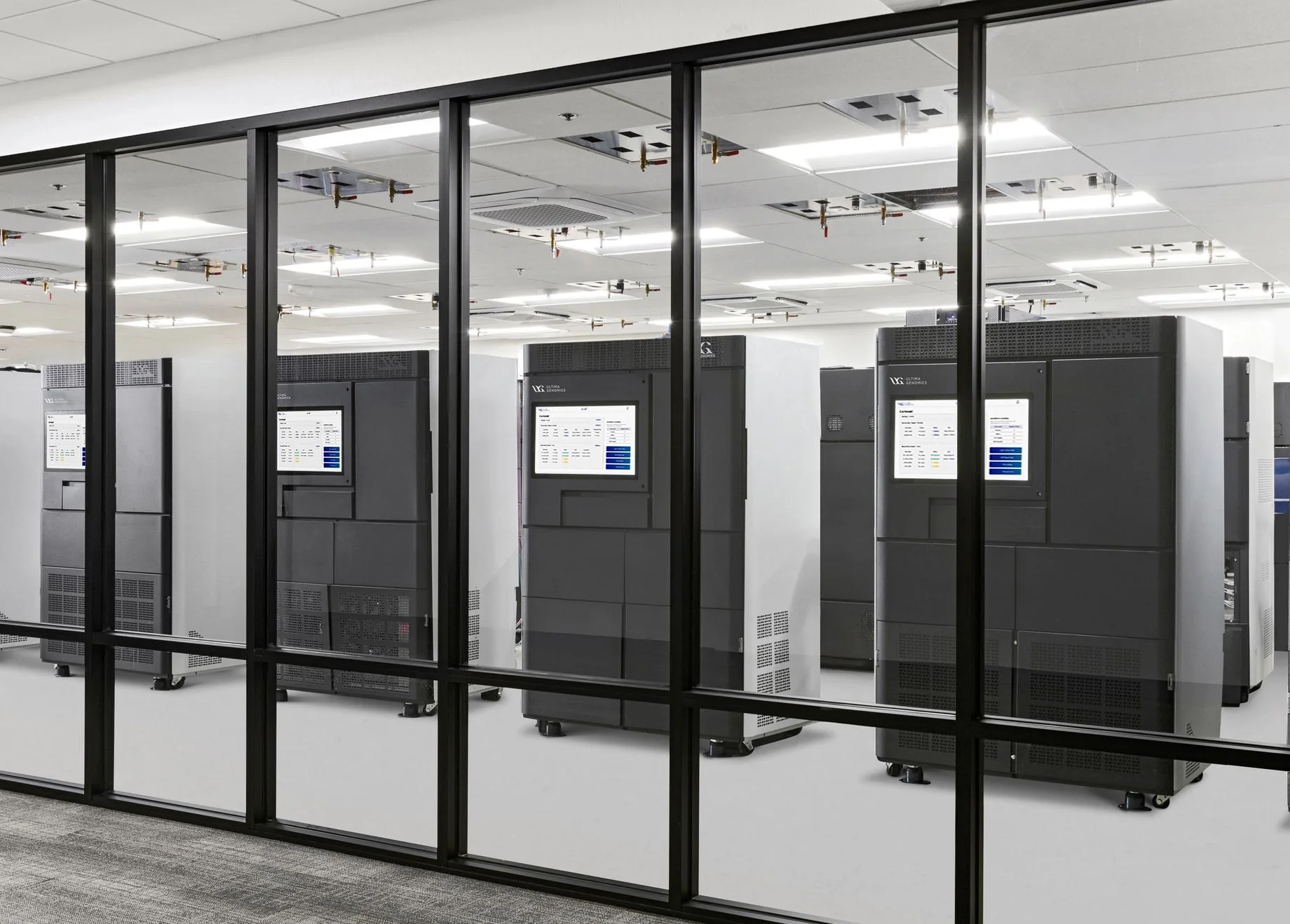
Ultima Genomics is a biotechnology company developing high-throughput sequencing systems designed to expand the scale of genomic information. Its platforms bring together complex hardware, optics, electronics, fluidics, chemistry, and software.
That product complexity carries directly into supply chain operations. Ultima is a high-mix business managing BOMs with over 3,000 parts. Individual systems can contain hundreds of components sourced across a broad supplier base. Because many buys require a fresh quote rather than drawing from a long-running open order, the team must manage literally thousands of RFQs and POs at once.
The challenge: Thousands of RFQs, POs, and supplier updates
Before Lumari, Ultima had the core systems it needed, but the work between those systems remained highly manual.
NetSuite held purchasing and order data. Arena held product, revision, sourcing, and change-order context. Supplier conversations lived in email. Internal coordination happened in Microsoft Teams. Buyers and external support staff had to connect that information by hand as they:
- generated and sent RFQs;
- reviewed supplier responses;
- created purchase orders;
- followed up for acknowledgements and delivery dates;
- entered supplier commitments into NetSuite;
- split PO lines when shipments changed;
- tracked open orders and shipments; and
- checked Arena for revision changes, drawings, and first-article requirements.
The administrative work crowded out the work only an experienced supply chain team could do. Every hour spent creating a PO or asking for a tracking number was an hour not spent resolving shortages, evaluating alternatives, reducing cost, or working through an engineering change.
Ultima needed more than another procurement database or supplier portal. It needed an operating layer that could understand the company’s systems and procedures, work through the communication channels suppliers already used, and take action across the entire workflow.
Lumari is not just automating things that we did do. It’s automating things that we didn’t do that we really needed to, like continuing to update NetSuite on every single one of these orders, the delivery status, and split lines when we get that information. That takes so much input that it wasn’t possible to do with the amount of staff that we had.
The solution: One operating layer from MRP to receipt
Through Lumari Forge, Ultima turned its sourcing and procurement procedures into a live operating model. Lumari connects NetSuite, Arena, Outlook, and Teams, giving AI agents the context and rules required to coordinate work across them.
The result is one continuous workflow:
- Start with demand. Lumari takes an MRP-driven buy list or a standalone sourcing requirement and groups like parts into supplier-ready RFQs.
- Gather product context. The agent pulls part details, drawings, revisions, approved-source data, lifecycle status, and change order context from Arena.
- Run the RFQ. Lumari prepares and sends requests using Ultima’s communication guidelines, quantity tiers, and quality requirements.
- Structure supplier responses. Quotes and supplier emails are linked to the sourcing event and quote data is structured in an apples-to-apples comparison table with all required context for an award decision.
- Move from award to PO. Lumari carries awarded items and quote context into a new purchase order directly in NetSuite, from where approval workflows are kicked off.
- Keep the order moving. Once the order is issued to the supplier, the agent follows up for confirmations, then keeps NetSuite current with revised delivery dates, split shipments, and tracking numbers.
- Escalate what matters. The team steps in when a shortage, revision change, quality issue, or supplier risk requires human judgment and expertise.
From planning to delivery
- PlanStart with demandMRP buy list or sourcing need
- ContextEnrich from ArenaParts, drawings, and revisions
- SourceRun and compare RFQsSupplier-ready requests and quotes
- BuyCreate the POCarry award context into NetSuite
- DeliverTrack and escalateConfirmations, shipments, and risks
NetSuite remains the ERP, Arena remains the PLM, and suppliers continue working through email as usual. Lumari operates across those systems and closes the gaps between them.
From the MRP until I get that item in the mail, it is 100% automated. What literally took us weeks happens instantly. It took multiple weeks, sometimes more than a month, to go through that process. Now it happens on the side. We don’t even think about it.
The result: A different operating model for procurement
The biggest change is not one isolated task. It is what the team spends its time doing.
The team manages exceptions instead of transactions
Lumari agents run the execution layer of Ultima’s procurement chain from planning through delivery. They launch and manage RFQs, structure supplier responses, create POs, coordinate approvals, follow up with suppliers, update commitments and split shipments in NetSuite, track deliveries, and escalate risks. Instead of managing every transaction across thousands of parts, Ultima’s supply chain professionals can concentrate on the smaller number of exceptions that require experience and judgment.
The team can be much more strategic in what they’re doing. You can’t do that kind of work when you don’t have the time.
RFQs are easier for Ultima and its suppliers
Automation created an unexpected supplier benefit. Lumari groups similar parts together before requests go out, so a supplier can receive one structured RFQ instead of a handful of fragmented requests.
We actually send fewer quotes out to specific suppliers because Lumari is better able to group like parts together. Our suppliers like that we have less communication with them, and they’re able to provide more information at once instead of piecemeal here or there.
When responses come back, the team can review the quote screen to confirm that required commercial and delivery terms are present before the award becomes a PO. The same item, supplier, quantity, drawing, revision, and quote context then carries forward into the PO instead of needing re-entry.
NetSuite is more accurate because supplier updates do not stop in email
Before Lumari, keeping every order current required more data entry than Ultima’s team could realistically complete with all their responsibilities. A supplier might confirm a date, split a shipment, or send tracking information, but ensuring each change reached the corresponding NetSuite record was a separate task.
Lumari follows up with suppliers, extracts those updates, and applies them to the system of record in real time. That added operational capacity produces a second benefit: more accurate purchasing data.
The biggest value is that the system has gotten more accurate. Lumari follows up with our suppliers to get confirmed delivery dates and tracking numbers. All of that gets entered back into our system. The data we have at any given time is significantly more accurate because it’s all being updated in real time.
More accurate order data also makes supplier metrics more trustworthy. Lumari provides real-time supplier scorecards so Ultima can evaluate delivery performance using the commitments and shipment information suppliers actually provided, rather than relying on incomplete or stale ERP fields.
Risks are surfaced across the procurement chain
Lumari continuously monitors sourcing events, supplier communications, open POs, delivery commitments, shipment activity, and product changes across Arena and NetSuite. The agents detect missing quote information, mismatched lot numbers, unacknowledged orders, shifting delivery dates, split shipments, tracking delays, revision changes, and other exceptions that could put supply continuity at risk.
Each risk is connected to the relevant part, supplier, PO, and communication history, then surfaced to the team for action. Ultima can work from a prioritized set of exceptions instead of relying on someone to notice the right email, reconcile conflicting information across systems, or discover a stale commitment after it has already become a problem.
Supplier visibility is no longer trapped in email
Critical supplier context no longer depends on who happened to be included on an email.
Lumari keeps the conversation and order context together, allowing anyone on the team to ask whether an item was ordered, when it was ordered, whether the supplier confirmed it, and where the shipment is now.
Everybody has visibility into supplier responses, not just the person who is in that email chain. I just ask Lumari. I can see conversations with suppliers even though I wasn’t the one having those conversations.
If a tracking number exists, Lumari monitors it daily. If an order has not been sent, acknowledged, or updated, the team can query the system and work from the resulting exception list instead of searching across NetSuite and multiple inboxes.
A more efficient and more strategic supply chain
Lumari gives Ultima a way to scale procurement capacity without scaling the administrative work around it. The team can apply its knowledge to supply continuity, engineering collaboration, cost, and supplier performance while the routine work required to move thousands of parts continues in the background.
It’s made our supply chain significantly more efficient.